Feeling constantly tired, struggling with sleep, or wondering why we don’t feel well despite trying to take care of ourselves how well do we really understand the signals our bodies send us?
And what role do our everyday habits, stress levels and living conditions play in our health? For those who have moved to another country, building a new life can bring additional challenges that are not always easy to recognize.
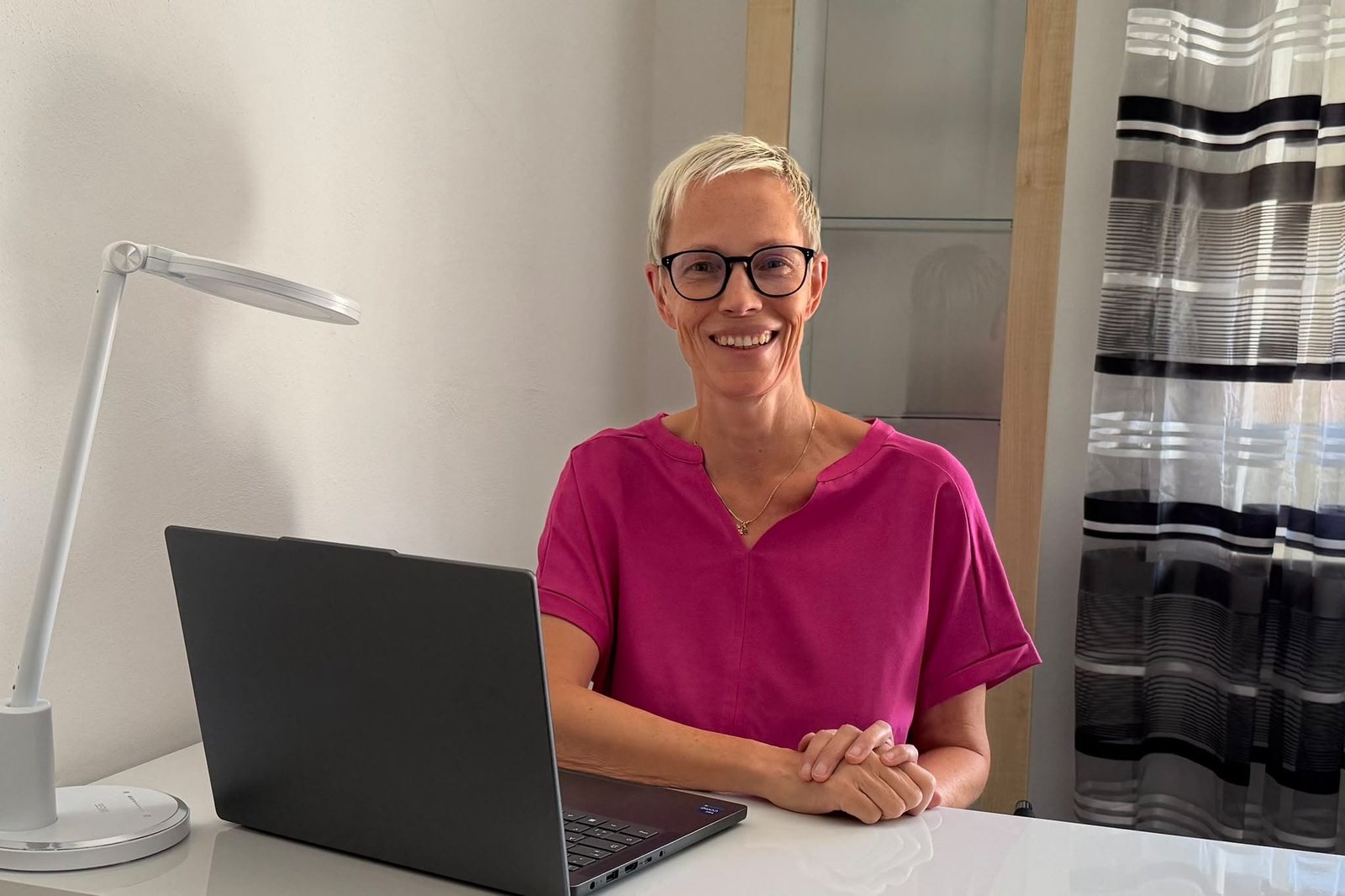
We spoke with Kirstin Jattke, who brings 16 years of clinical experience and more than 20 years in medical technology and healthcare innovation, about epigenetics, lifestyle, stress, nutrition and hypnosis. She shares why understanding our health requires looking beyond individual symptoms and considering the bigger picture of our lives.
1. Sometimes, searching for an answer to one question leads us down a completely different path. How did your journey begin? After years of working in clinical settings and medical technology, you have developed an approach that brings together epigenetics, micronutrients, and hypnosis. What led you to this point? Was there a particular experience that changed the way you look at health?
I spent 16 years working in clinical settings before moving into the medical technology industry, where I worked for more than 20 years in healthcare innovation, including at Siemens Healthineers and Philips.
My work was always about understanding how technology and science can improve healthcare.
But over time, I became increasingly interested in something else: the individual person behind all the data.
We have incredible diagnostic technologies today, yet understanding what helps someone feel better in everyday life is often much more complicated.
That curiosity eventually led me to epigenetics, micronutrients, and hypnosis. At first glance, these may seem like very different fields. But for me, they complement each other. One looks at our biological predispositions, another at our nutritional needs, and hypnosis at our habits and subconscious patterns.
I wanted to bring these perspectives together in a way that is personal, practical, and grounded in science. That’s how my health consulting practice came to life.
Understanding Our Body’s Signals
2. We wake up tired, our energy levels drop during the day, and we struggle to sleep at night… Many of us try to solve these problems with coffee, vitamins, or simply by telling ourselves to try harder. But what if the problem isn’t where we think it is? Why do you think we know so little about how to interpret the signals our bodies send us?
I think we’ve become very good at ignoring our body’s signals. We push through tiredness, compensate with coffee, accept poor sleep, and often consider stress a normal part of life.
But fatigue, sleep problems, or a lack of energy can have many different reasons. Sometimes it’s our lifestyle, sometimes our nutritional status, sometimes hormonal changes or underlying medical conditions. And often, several factors come together.
What I find important is to stop looking at individual symptoms in isolation.
Instead of immediately asking, “What supplement should I take?”, I’d rather ask, “What’s going on in my life and my body that might explain how I’m feeling?”
That’s where a more individual approach begins. And of course, persistent or unexplained symptoms should always be medically evaluated.
3. The wellness industry has become a huge business. Supplements, specialized diets, biological age tests, sleep trackers… We’re constantly being told to become a better version of ourselves. Do you think we’re actually becoming healthier, or have we turned the pursuit of health into another performance measure?
Absolutely, and I think that’s quite ironic.
We’re surrounded by information about how to optimize our health. Better sleep scores, more supplements, younger biological age, perfect nutrition. But at some point, trying to be healthy can become stressful in itself.
Don’t get me wrong. I love science, data, and technology. I’ve worked with them for most of my professional life.
But more data doesn’t automatically mean better health.
The same goes for supplements. They can be useful when there’s a genuine need, but taking more isn’t necessarily better.
My philosophy is quite simple: understand what your body actually needs, make informed decisions, and focus on changes that fit your life.
Health shouldn’t become another full-time job.
Can Our Lifestyle Influence How Our Genes Work?
4. Our genes are part of the biological story we inherit. But we also know that stress, sleep, and lifestyle are connected to how our genes function. What exactly does epigenetics change? If our genes aren’t our destiny, how much influence do we really have over our own biology?
Our genes are important, but they don’t tell the whole story.
I like to explain it this way: our DNA is the instruction manual we’re born with. Epigenetics is one of the mechanisms that influences how those instructions are used.
Factors such as nutrition, stress, sleep, and our environment can influence biological processes, including aspects of gene regulation.
That doesn’t mean we can simply switch any gene on or off by changing our lifestyle. Biology is much more complex than that.
But it does mean we’re not entirely passive when it comes to our health.
For me, the interesting question isn’t just what we’ve inherited. It’s what we can realistically influence through our everyday choices.
And that’s an encouraging perspective, without promising that we can control everything.
5. Epigenetic testing is attracting a lot of interest these days. But does everyone need to take an epigenetic test? Let’s say I decide to have one. What could I learn that might genuinely change my life? How can we distinguish between a test that provides meaningful, actionable insights and one that simply produces interesting-sounding results?
No, absolutely not. And I think that’s important to say.
A test should never be an end in itself. The question is always: what useful information could it provide, and what would we actually do differently with that information?
First, we need to distinguish between genetic tests, which examine DNA variants, and epigenetic tests, which measure certain regulatory changes. These are not the same thing.
Genetic information may offer insights into certain biological predispositions, but the usefulness depends very much on what is being tested and how well the findings are supported by scientific evidence.
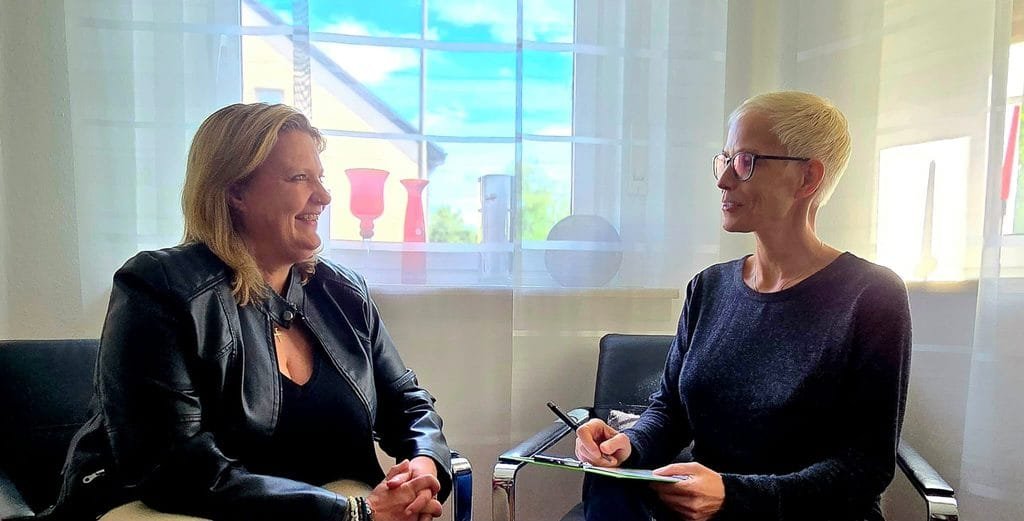
That’s why my work always starts with a comprehensive health questionnaire. I want to understand the person’s symptoms, medical history, lifestyle, nutrition, sleep patterns, stress levels, and individual goals before considering whether a test could add meaningful information.
Sometimes this detailed assessment already reveals areas worth addressing. And sometimes additional testing can help us explore specific questions.
For me, the real value isn’t in collecting as much data as possible. It’s in connecting the relevant information and translating it into realistic, personalized recommendations.
The Hidden Stress of Migration
6.Building a life in a new country, trying to express yourself in another language, leaving behind familiar surroundings, and starting over… Can migration leave an invisible burden on us? Even after we’ve adjusted to our new lives, can stress continue to affect our bodies? What are the less visible burdens we need to recognize in order to feel better?
Definitely. Starting a new life in another country can be exciting and enriching, but it can also be demanding.
A new language, a different culture, building relationships, finding your place in a new environment – even positive changes require adjustment.
And sometimes we underestimate how much energy that takes.
Stress doesn’t always feel like stress. It may show up as difficulty sleeping, constant tension, fatigue, or the feeling that you can never really switch off.
What matters to me is understanding the individual situation rather than assuming that everyone experiences these challenges in the same way.
Sometimes people have become so used to functioning that they no longer notice how much pressure they’re under.
Recognizing that can be an important first step towards making changes.
Can Hypnosis Help Us Change Our Habits?
7. Some people eat when they’re stressed, others constantly reach for their phones, while some lie awake at night, unable to quiet their minds. We repeatedly tell ourselves, “I’m not going to do this anymore,” yet we find ourselves falling back into the same patterns. Why does this happen? How can hypnosis help us change these automatic habits, and what actually happens during a hypnosis session?
Because knowing what we should do and actually doing it are two very different things!
We all know situations where our rational mind says one thing, but our behavior tells another story. Think about smoking, emotional eating, or lying awake at night with thoughts that just won’t stop.
Many behaviors become automatic over time. And simply telling ourselves to stop isn’t always enough.
That’s one reason I find hypnosis so fascinating.
Hypnosis isn’t about losing control or someone taking over your mind. It’s a state of focused attention and relaxation in which we can work with suggestions and explore alternative responses to familiar situations.
In my sessions, we first talk about the person’s goals and patterns. The hypnosis itself is then tailored to that individual.
I use hypnosis to support people with challenges such as smoking cessation, stress, sleep difficulties, and certain fears.
It’s not magic, and results vary. But for some people, it can be a valuable way to support change.
What Does Personalized Health Consulting Involve?
8. Imagine someone comes to you and says, “I’m eating better, taking my vitamins, and trying to get my life in order, but I still don’t feel well.” Where would you start? How do you look at a person’s body, lifestyle, and mental habits together to understand what they actually need?
I start by listening.
That may sound simple, but I think it’s one of the most important parts of my work.
I want to understand the whole picture. How is this person sleeping? What does their everyday life look like? What are they eating? Are they under constant stress? What have they already tried?
I also look at their nutritional habits, supplement use, and relevant existing laboratory results, where available. Sometimes a micronutrient-related question deserves closer attention. Sometimes the more important issue is stress or a behavioral pattern.
And sometimes the symptoms need further medical clarification before we do anything else.
I don’t believe everyone needs a genetic test, ten supplements, or multiple hypnosis sessions.
What I want to offer is clarity: understanding which factors might matter, what is supported by evidence, and which realistic steps could make sense for that individual.
My goal is that people leave a consultation understanding themselves a little better and knowing what to do next.
9. Let’s talk about the financial side of things, too. How much do your epigenetic tests, micronutrient consultations, and hypnosis sessions cost? For our readers living in Europe, particularly in the Netherlands and Germany, are these services covered by health insurance? Which services may qualify for reimbursement, and which must be paid for out of pocket?
My consultations are tailored to the individual, so the costs depend on what someone actually needs.
An initial consultation, a micronutrient assessment, a genetic test interpretation, and a hypnosis session involve different levels of time and preparation.
I always discuss the scope and costs in advance, so there are no surprises.
My services are generally self-funded. Insurance reimbursement shouldn’t be assumed, whether someone lives in Germany or the Netherlands. Some policies may provide benefits for certain complementary services, but the conditions depend on the insurer, the type of service, and the provider’s qualifications.
I encourage anyone interested to contact me first. We can briefly discuss their goals, whether my approach is suitable, and what the next steps and costs would be.
I believe people should make informed decisions about both their health and their money.
How Much Does Personalized Health Consulting Cost?
10. Trying to live healthily by measuring everything, researching every symptom, and constantly working to improve ourselves can become exhausting, too. So, what are the things that truly matter when it comes to living a healthier life? What could our readers start doing differently tomorrow, and where could they give themselves permission to be a little less demanding of themselves?
I would start with the basics. Good nutrition, regular movement, enough sleep, and finding ways to manage stress.
It sounds almost too simple, doesn’t it? But these are the things we often neglect while searching for more sophisticated solutions.
And I’d add something else: curiosity instead of perfection.
Pay attention to how you feel. Notice what gives you energy and what drains it. Question habits that no longer serve you. But don’t turn every meal, every night’s sleep, or every decision into a health project.
Health is individual. What works beautifully for one person may not be right for another.
That’s also the philosophy behind my practice: “Health is individual. So is the path to it.”
And if you’re unsure where to start, you don’t have to figure everything out on your own. Sometimes an outside perspective can help bring things into focus.
About Kirstin Jattke
With 16 years of clinical experience and more than 20 years in medical technology and healthcare innovation, including at Siemens Healthineers and Philips, Kirstin brings a unique combination of clinical understanding, scientific knowledge, and a personal approach to health.
Today, she runs her own practice for personalized, systemic health consulting in Nuremberg, Germany.
She combines epigenetics, micronutrient consulting, and hypnosis to help people better understand their individual health concerns and identify practical next steps.
Her consultations are available in English and German, online and in person.
Curious about what might be right for you?
Get in touch for a free introductory conversation.
Health is individual. So is the path to it.

One thought on “Are Our Genes Our Destiny? Kirstin Jattke on Epigenetics, Stress and Health”